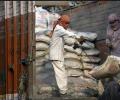
The Indian cement industry is hopeful of greener pastures after a long period of stress led by pricing pressures and other factors. The second half of FY25 is expected to bring respite due to price hikes, cost benefits and higher volumes, said analysts. The optimistic momentum also makes cement stocks attractive, analysts added, advising to buy dips following a period of bearish sentiment in these stocks.

The interim magisterial inquiry report and the MCD Karol Bagh zone superintending engineer report were submitted to revenue minister Atishi who alleged that the "bureaucracy" was showing "laxity" in investigating the death of the civil services aspirants.

The analysis by the European Club Association (ECA) also warned that the biggest losses would be felt next season, even if it is played in full.

'If you look at assets truly working for us, you should look at Aakash and Great Learning.'

Markets regulator Sebi has barred industrialist Anil Ambani, 24 other entities, including former key officials of Reliance Home Finance from the securities market for five years for diversion of funds from the company. Sebi has imposed a penalty of Rs 25 crore on Ambani and restrained him from being associated with the securities market including as a director or Key Managerial Personnel (KMP) in any listed company, or any intermediary registered with the market regulator, for a period of 5 years.

Vodafone Idea and Airtel have made provisions for their liabilities arising from the Supreme Court order in their latest September quarter results.

From the Sensex basket, Bajaj Finance, Mahindra & Mahindra, HDFC Bank, JSW Steel, Maruti, Wipro, Bharti Airtel, Bajaj Finserv, ICICI Bank and ITC were the major gainers. Nestle India, HCL Technologies, Larsen & Toubro, Tata Consultancy Services, Tata Motors and Infosys were among the laggards.
The windfall tax on oil produced within India and fuel exported overseas will make up for more than three-fourths of the revenue that the government lost when it cut excise duty on petrol and diesel to cool soaring inflation, industry sources said. India on July 1 joined a select league of nations globally that have taxed windfall gains accruing to oil companies from soaring energy prices. The government slapped a Rs 6 per litre tax on the export of petrol and jet fuel (ATF) and Rs 13 a litre on the export of diesel effective July 1. Additionally, a Rs 23,250 per tonne tax was levied on crude oil produced domestically.
Bharat Heavy Electricals Ltd (BHEL) is India's largest engineering and manufacturing enterprise, operating across energy, industry, and infrastructure sectors. The investment path for the stock is based on a large order backlog, continued strong order inflows, and rising power demand, which should push demand for BHEL's equipment and services. BHEL has historically held over 70 per cent market share in power projects.

Total revenue from operations however rose to Rs 67,081.29 crore as compared with Rs 59,818.22 crore in the year-ago period

Airlines earn ancillary revenues from freight, sale of food, drinks and gifts onboard, sale of travel insurance, hotel rooms and car rentals, through frequent flier programmes, and by trying to cross-sell other products like credit cards and medical insurance. Globally, airlines make 4-5 per cent of their revenues from ancillary sources.


Company's revenue rises 3-fold to touch $206 million while total cost jumps over 6 times to $500 million

There's a hint of new competition riding into a sector that has attracted attention for being in a duopoly-like situation. Rapido, a commute app known for its budget-friendly bike-taxi services, on Tuesday announced its entry into the cab market, which is currently dominated by marquee brands Uber and Ola. Rapido's cab foray will be enabled by a software as a service (SaaS)-based platform.

'When the bombing happened in the Taj Mahal hotel in 2008, that was a very sad moment, but he really took care of the people, took care of everybody and that was when you saw some of his best moments.' 'There are some things which we will never forget. That is when the best of a person comes out.'

Tata Power saw a big sell-off, with the stock falling almost 8 per cent after declaring disappointing results for the October-December quarter (Q3) of 2023-24 (FY24) on Friday evening. The company reported net consolidated revenue of Rs 14,650 crore, up 4.4 per cent year-on-year (Y-o-Y), and earnings before interest, tax, depreciation, and amortisation (Ebitda) of Rs 2,607 crore, up 2 per cent Y-o-Y, in the quarter, led by higher sales across Odisha distribution companies (discoms) and capacity addition in renewables. This was well below consensus estimates.

Add to it, associate sponsor companies like Unacademy, Dream11, CRed, Upstox, and Tata Motors, who pay in the range of Rs 120 crore each. Some subsidiary sponsors are also there.
While analysts assessed One97 Communications (Paytm) Q1FY24 results as in-line with guidance, the market was disappointed and the stock fell by around 5 per cent. Paytm reported a net loss of Rs 360 crore, but revenue grew 39 per cent year-on-year (YoY) to Rs 2,340 crore. It was supported by strong growth in gross merchandising value (GMV), higher disbursements and the addition of subscription devices.

Flipkart, the e-commerce company owned by Walmart, is intensifying its efforts to achieve profitability as it is eyeing a valuation of approximately $60 billion at the time of its initial public offering (IPO), now planned in 2025-2026, instead of this year, according to people familiar with the matter. The firm might consider listing in the US or any other geography, including India. The company, which counts the likes of Amazon and Reliance's JioMart among its competitors in India's burgeoning e-commerce market, had also contemplated launching an IPO in 2022-2023.
Illegal and unlicensed software installations continue to be a problem and source of revenue loss for software companies worldwide.

Diesel prices are raised every month by up to 50 paise per litre to trim the losses. Rates were last raised on August 1 after which losses had dipped to Rs 1.33.

Information technology (IT) companies have been on the road to revival in the past one year. From being the worst-hit sector in 2022 with a loss of 26 per cent, the Nifty IT index closed 2023 with gains of 24 per cent. So far in 2024, the index is up around 7 per cent against the nearly flat Nifty 50 benchmark index. The IT index has been on a continuous decline in the last three sessions.

The 21st Law Commission said the special status given to the entity of HUF was a 'so-called gift by the British', who could not comprehend the complex socioeconomic structure of Indian families. 'Now, this status is being used for the evasion of tax only,' it said.
The public sector oil companies -- Indian Oil Corporation, Bharat Petroleum and Hindustan Petroleum -- may suffer a Rs 25,000 crore revenue loss on fuel sales this fiscal, said S Behuria, chairman and managing director, IOC.IOC, BPCL and HPCL incurred a revenue loss of Rs 1.03 lakh crore on sale of petroleum fuel in 2008-09. The global rise in crude oil prices will increase the under-recoveries for PSUs on sale of fuel at controlled prices.

Brokers believe that the higher charges may not completely deter investors from taking bets in F&O but could help cool down some activity, as the threshold to break even rises.

After a spike, losses on sale of diesel have fallen by nearly a rupee to Rs 2.49 per litre as international oil rates have moderated.

Analysts refuse to read too much into the early birds numbers.

FSN E-Commerce Ventures (Nykaa) hosted its annual investor day recently. The responses were positive from analysts. Although some analysts pared FY25 and FY26 estimates, the bulk continued to issue 'buy' calls after the stock rose 2.5 per cent. The management expects the Beauty & Personal Care (BPC) business to grow at a 25 per cent compound annual growth rate (CAGR) during FY24-28.
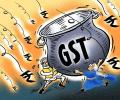
With most states on board to raise revenue so that they do not have to depend on Centre for compensation, the GST Council at its meeting next month is likely to consider a proposal to do away with the 5 per cent slab by moving some goods of mass consumption to 3 per cent and the remaining to 8 per cent categories, sources said. Currently, GST is a four-tier structure of 5, 12, 18 and 28 per cent. Besides, gold and gold jewellery attract 3 per cent tax. In addition, there is an exempt list of items like unbranded and unpacked food items which do not attract the levy.

Five people were killed and about 50 missing following several incidents of cloudburst in Himachal Pradesh where rains washed away many houses, bridges and roads, officials said on Thursday.

The margins of tyre manufacturers could come under pressure given the rise in rubber prices and the moderating demand for tyres. In the past three quarters, the revenue growth for listed tyre companies has moderated from low to mid-single-digit on account of factors such as lower demand in replacement segments, weak export markets and the decline in the average selling prices to car makers (OEMs). Demand trends could remain muted in the near term, given the weak passenger vehicle replacement demand, assuming a typical replacement cycle of 3-5 years, and demand moderation in the OEM segment.

BJP leader Sushil Kumar Modi on Wednesday said it is not possible to bring petrol and diesel under the GST regime for the next eight to 10 years as it would cause an annual revenue loss of Rs 2 lakh crore to all states. Centre and states collectively collect over Rs 5 lakh crore tax on petroleum products, Modi told the Rajya Sabha while participating in a discussion on the Finance Bill 2021. The statement assumes significance in view of the rise in petrol price for the past over one year which even touched Rs 100 per litre in some states. In the first reduction in rates in over a year, petrol price on Wednesday was cut by 18 paise per litre and diesel by 17 paise a litre as international oil prices tumbled to the lowest since early February.

PVR-Inox is in an inherently fickle business. If there is a string of flops, the box office collections will be weak. Conversely, Q2FY24, which witnessed several hits, has brought about an upside in revenues. However, the merger has led to market share gains and synergies that helped bring breakeven down to approximately 20 per cent occupancy.
The country's largest airline IndiGo on Thursday reported more than doubling of its net profit to Rs 1,894.8 crore in the three months ended March 2024 and announced the introduction of business class in select routes this year. The strong performance in the latest March quarter, which also marks six consecutive quarters of profitability, was fuelled by higher traffic, increased capacity and a favourable external environment.

Tata Motors reported a consolidated net profit of Rs 17,483 crore (adjusted for exceptional gains and losses) for Q4FY24, surpassing TCS' consolidated net earnings of Rs 12,434 crore. For the automotive major, this marked a 213.7 per cent year-on-year increase in the bottom line, from Rs 5,573.8 crore a year ago. In contrast, India's biggest IT firm saw a more modest Y-o-Y growth of 9.1 per cent in net profit, from Rs 11,392 crore.

Land, houses and other infrastructure facilities required for the rehabilitation procedure would be constructed at the earliest, the authorities said.

The GST Council in its next meeting may look at raising the lowest tax slab to 8 per cent, from 5 per cent, and prune the exemption list in the Goods and Services Tax regime as it looks to increase revenues and do away with states' dependence on Centre for compensation, sources said on Sunday. A panel of state finance ministers is likely to submit its report by this month end to the Council suggesting various steps to raise revenue, including hiking the lowest slab and rationalising the slab. Currently, GST is a four-tier structure attracting a tax rate of 5, 12, 18 and 28 per cent.
Encouraging results for PayTM (One97 Communications) for the 2022-23 financial year (Q4FY23) have led to a surge in the company's stock price, gaining nearly 5 per cent during Monday's trade. PayTM reported Q4FY23 revenues at Rs 2,330 crore, up 51 per cent on year-on-year (YoY) basis (13.2 per cent quarter-on-quarter or QoQ), led by monthly transaction user (MTU) growth of 27 per cent and average revenue per user or ARPU growth of 19 per cent YoY. MTU is defined as users with at least one transaction/month.

In a bad start to the new year, hotels are counting their losses again. Weddings and corporate events for this month have either been called off or postponed. The blow has throttled the nascent recovery which had kicked in around August. It is primarily hurting the banquet-driven hotel chains, some of which are seeing cancellations running into lakhs for a single day.
